
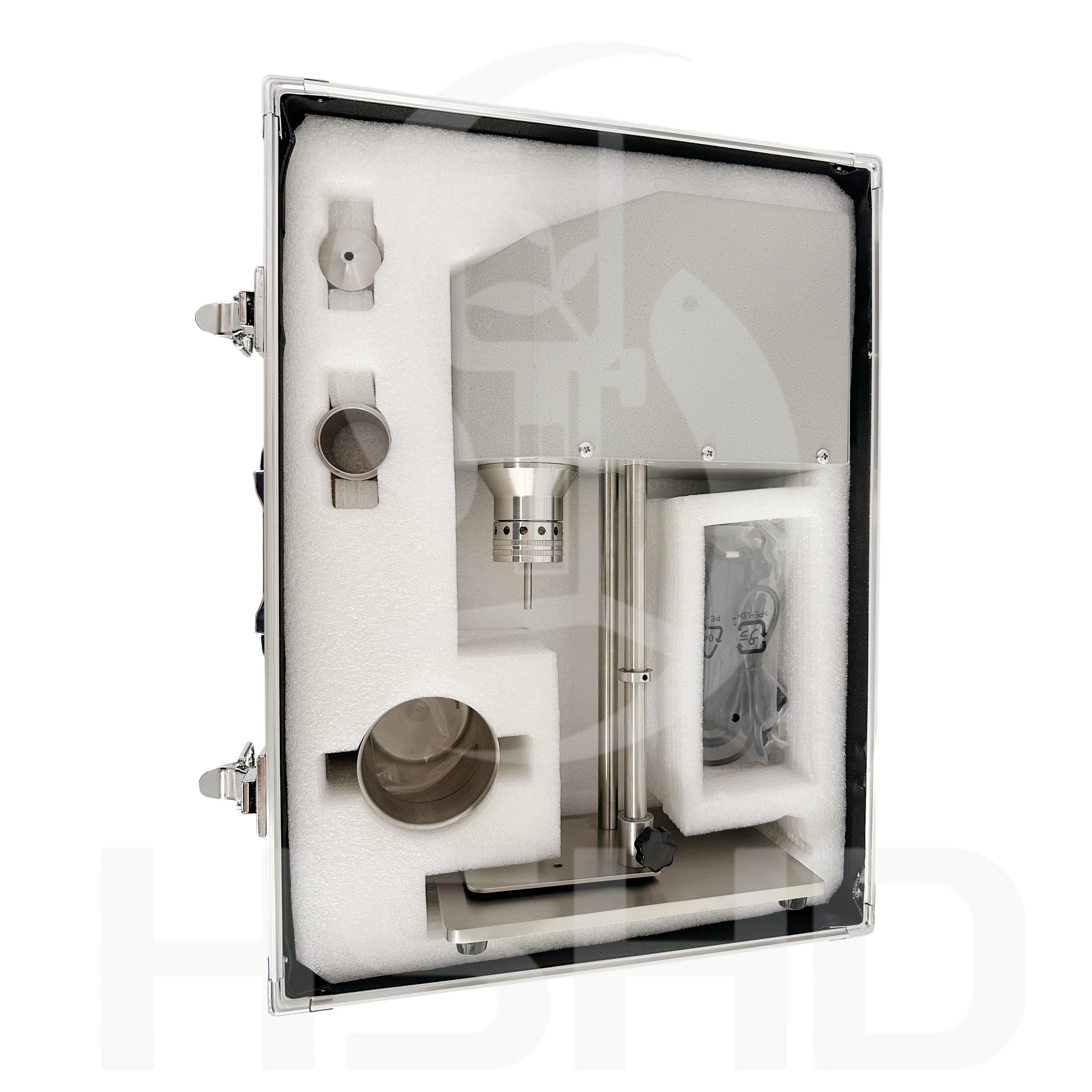
1.Overview
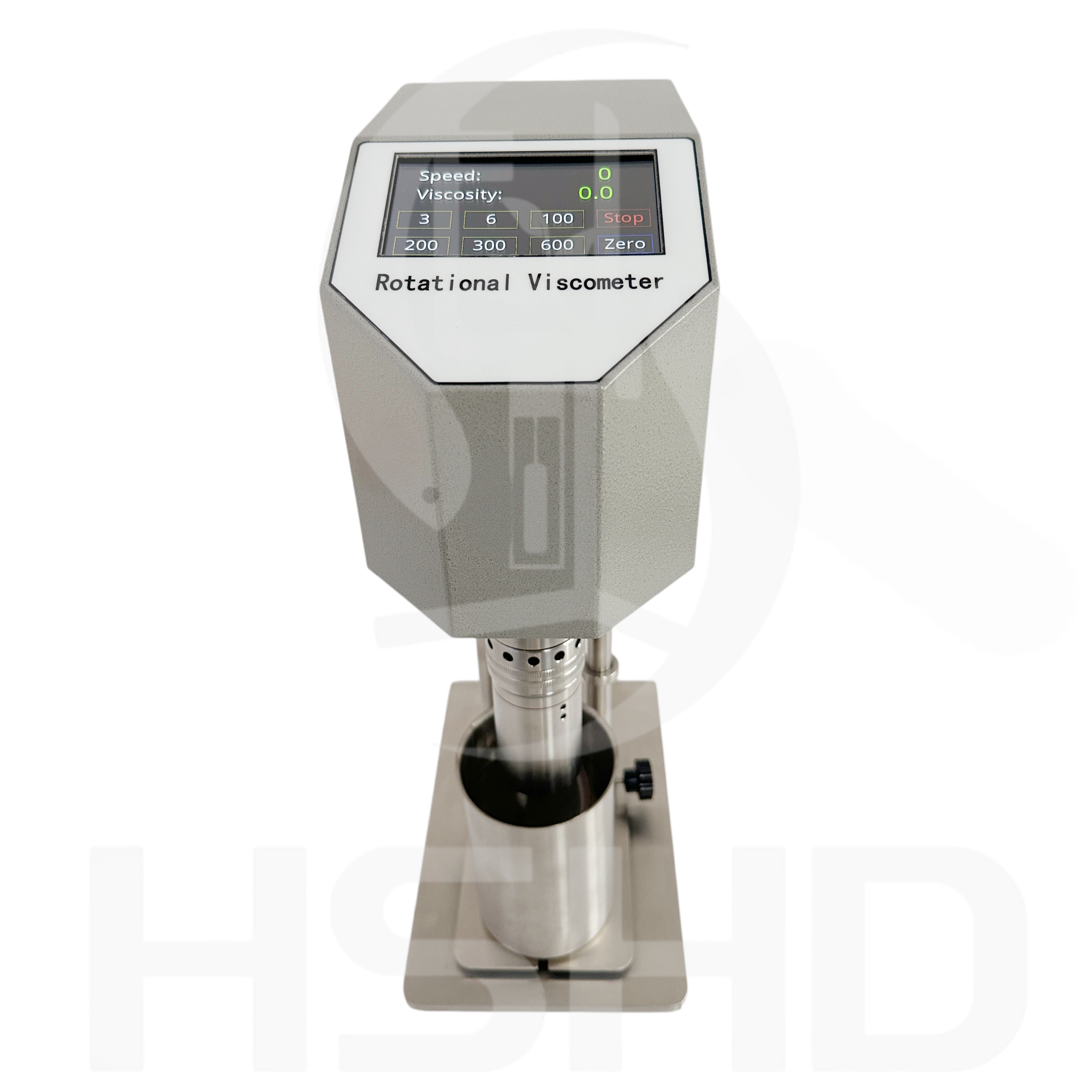
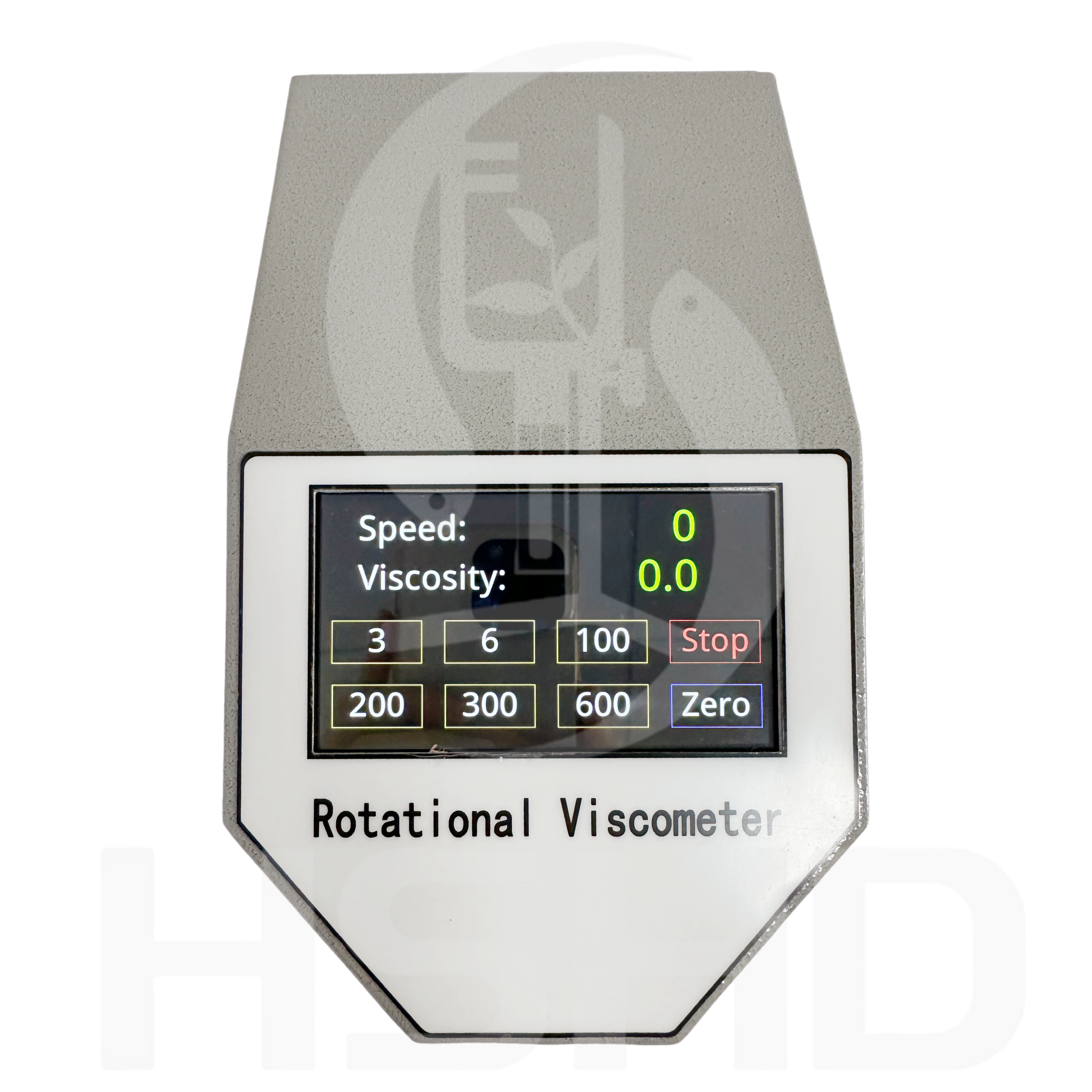
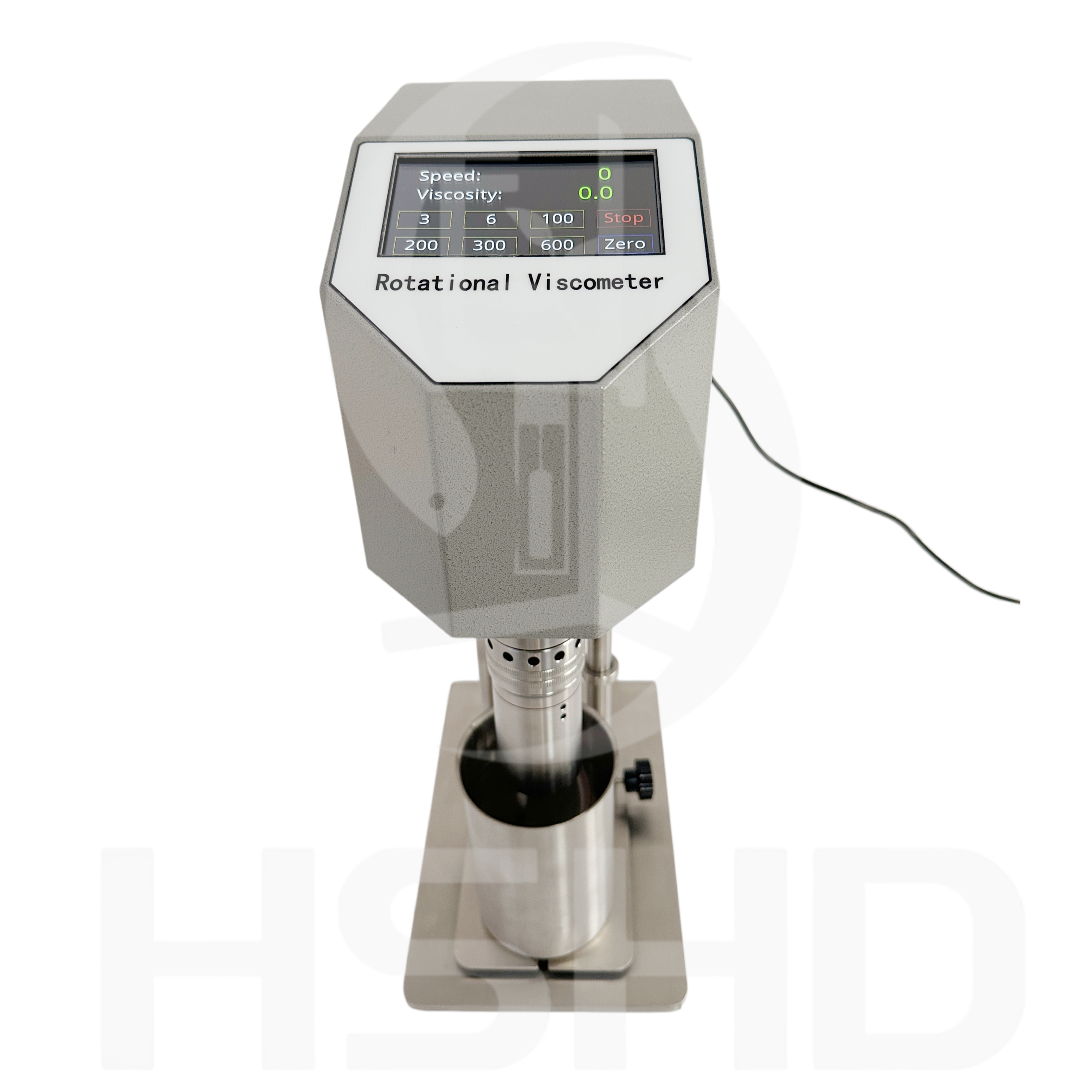
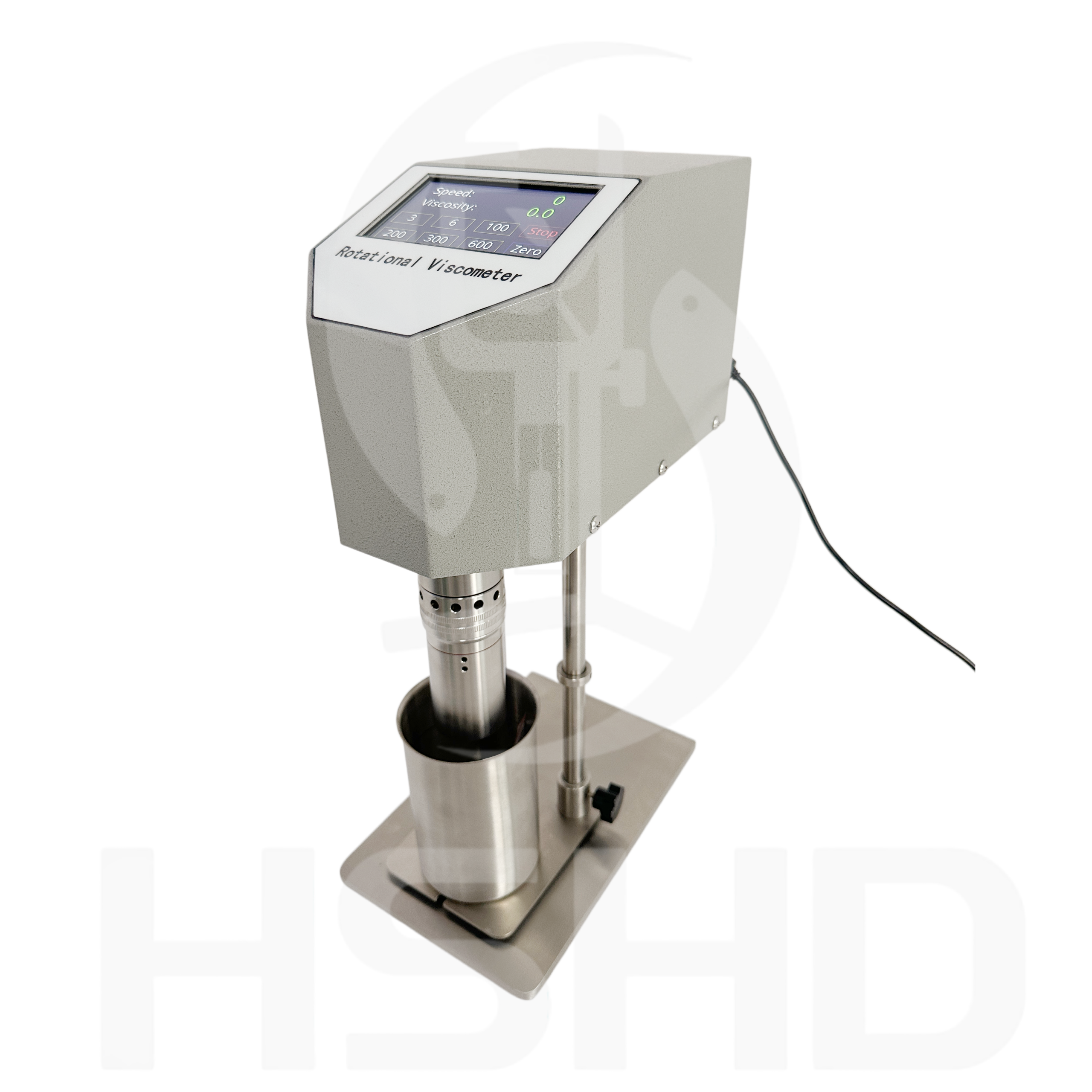
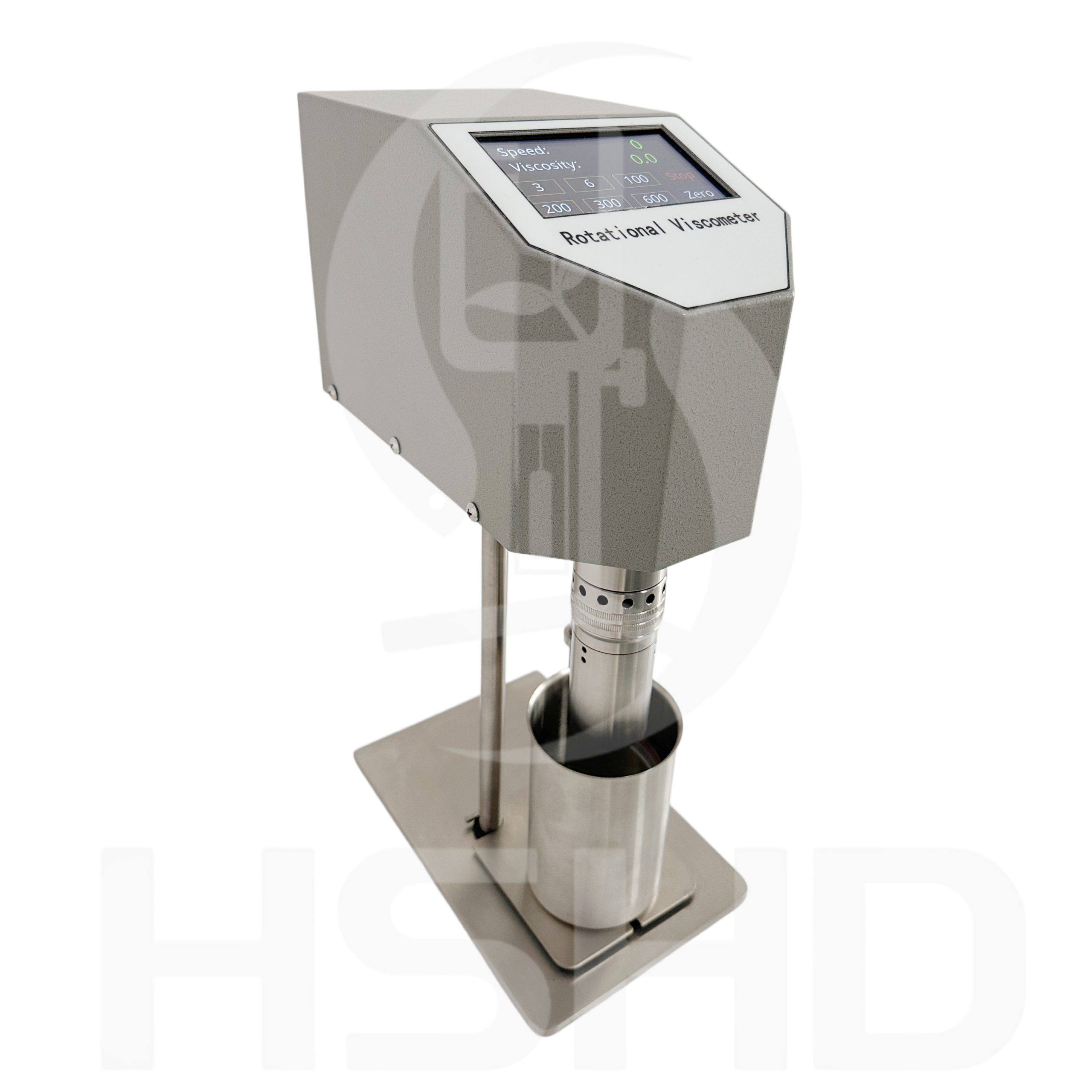
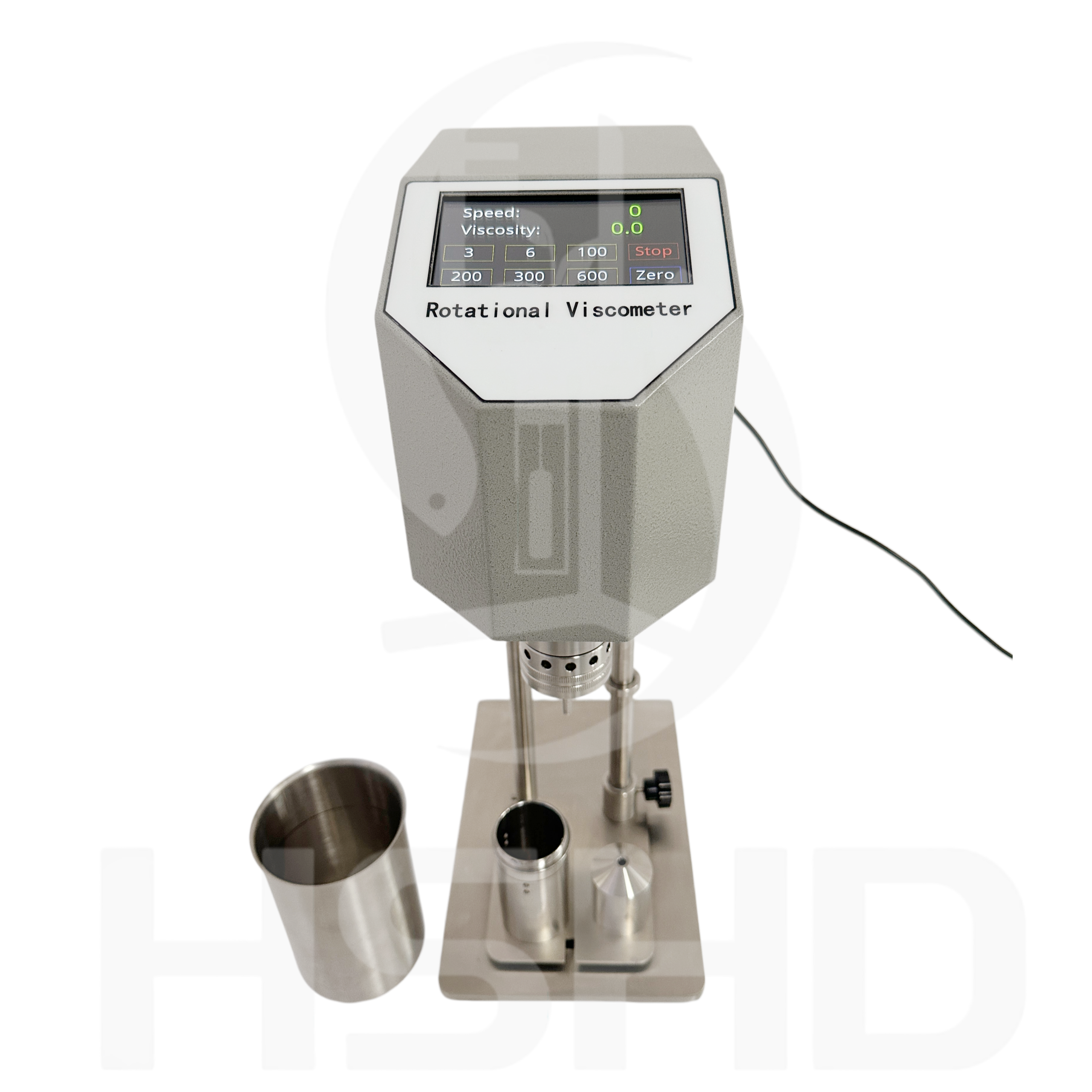
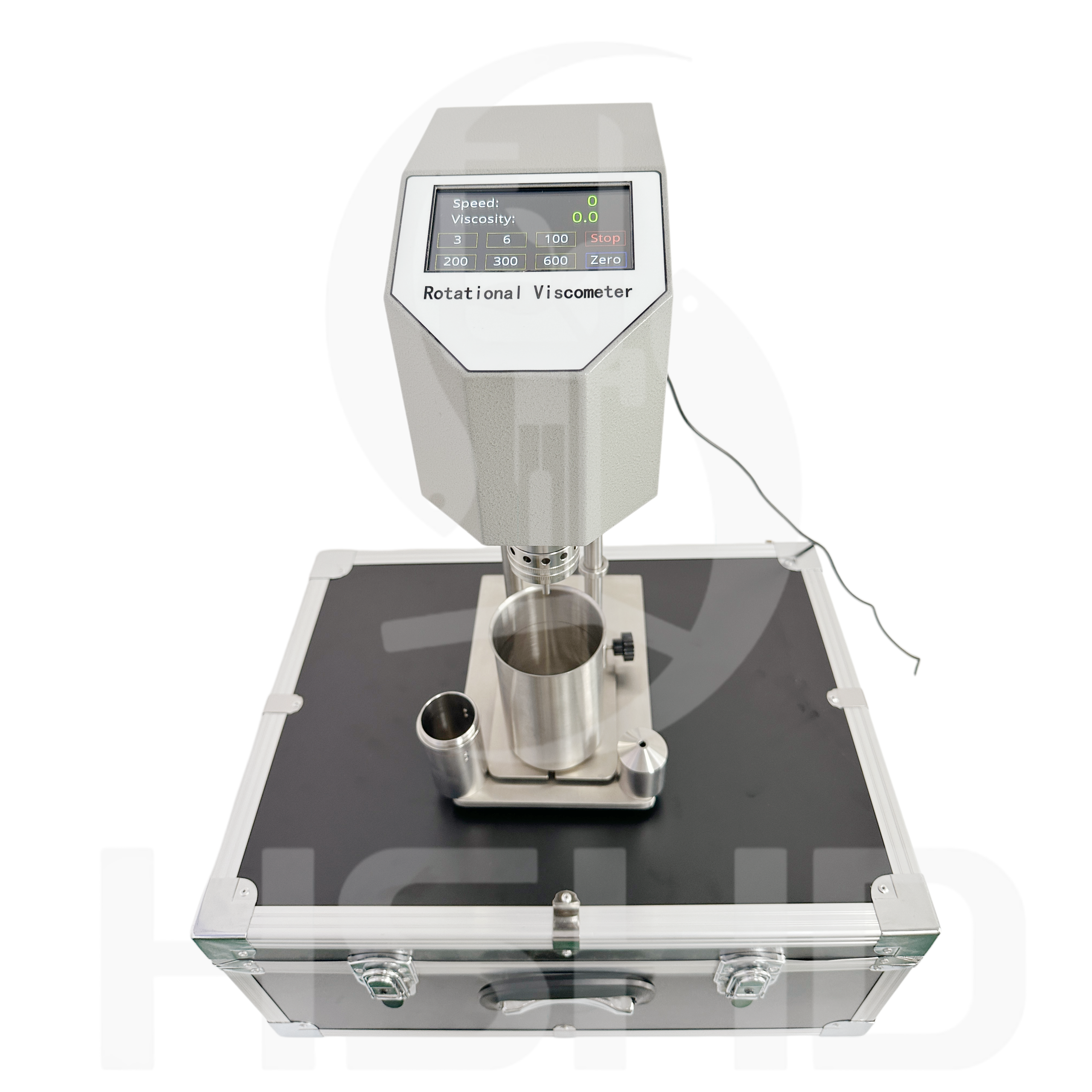
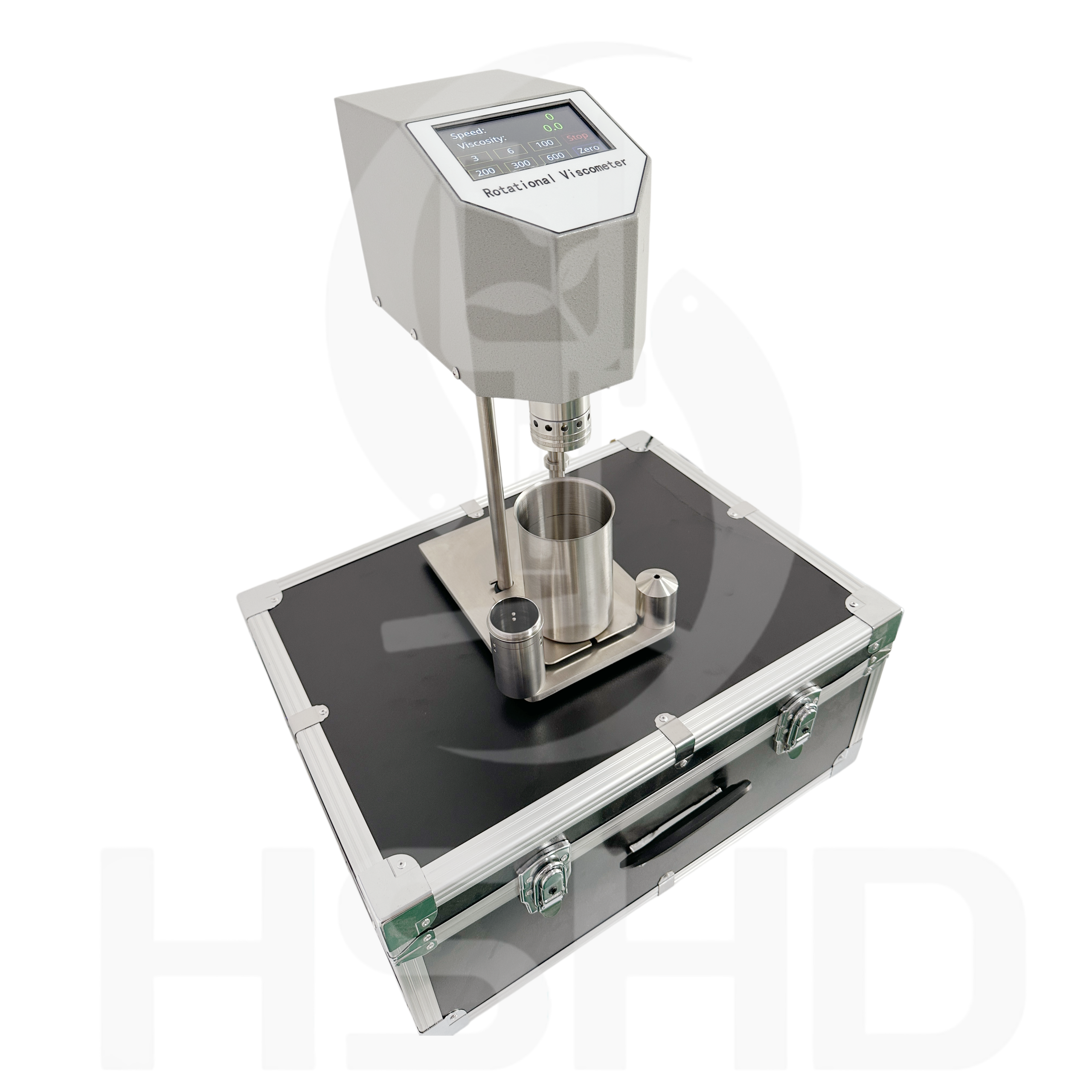
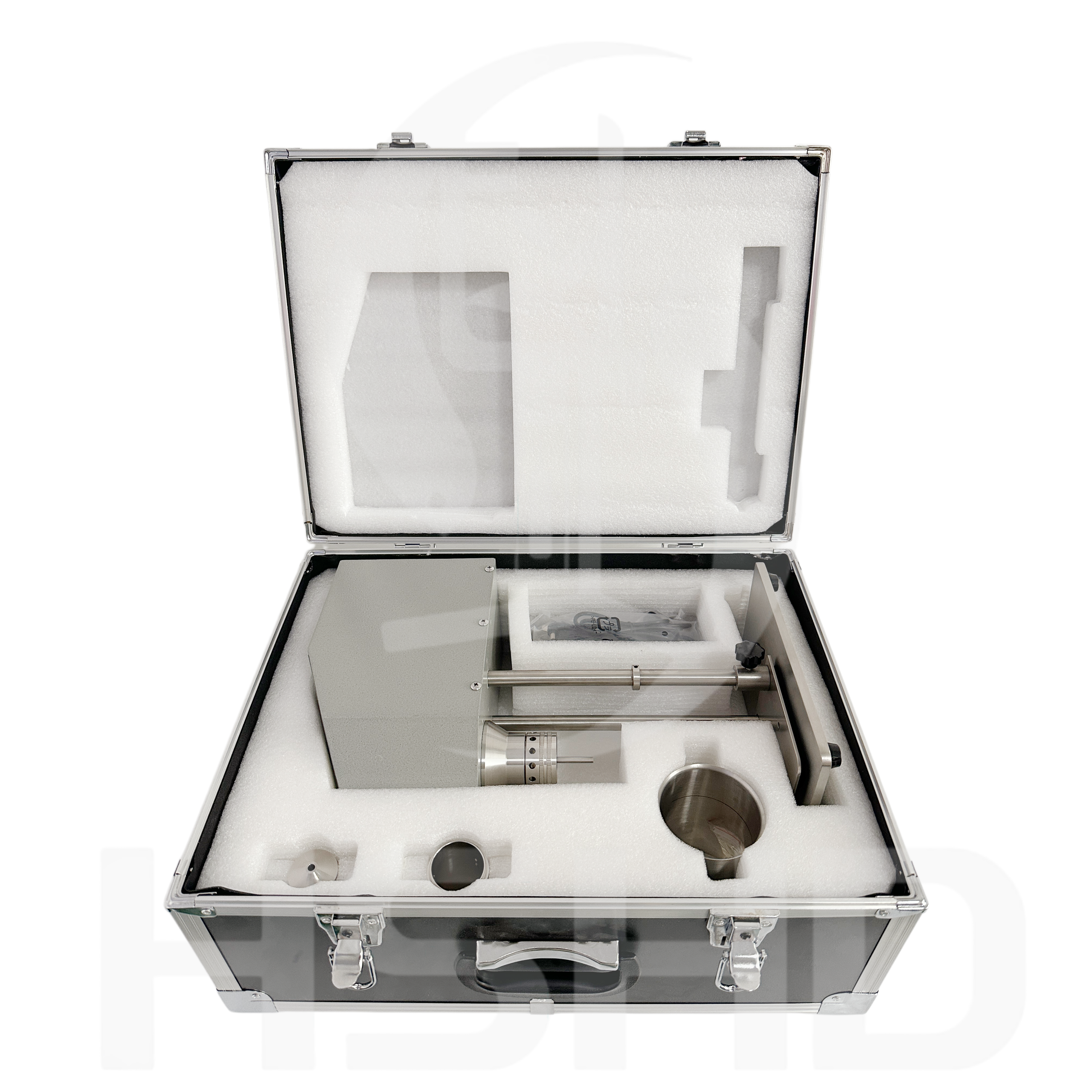
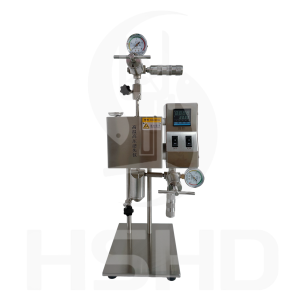
The HSHD-1005 digital six speed rotary viscometer is a new type of viscometer designed by our company. This viscometer is designed with an embedded microprocessor, built-in high-precision angle sensor, and driven by a stepper motor for smoother and more accurate rotation speed; Touchscreen operation is more intuitive and less prone to damage. Real time display of test liquid viscosity value and stirring speed on the touch screen.
This product can be widely used in industries and research institutions such as petroleum, chemical, food, medicine, cosmetics, etc.
Introduction to Working Principle
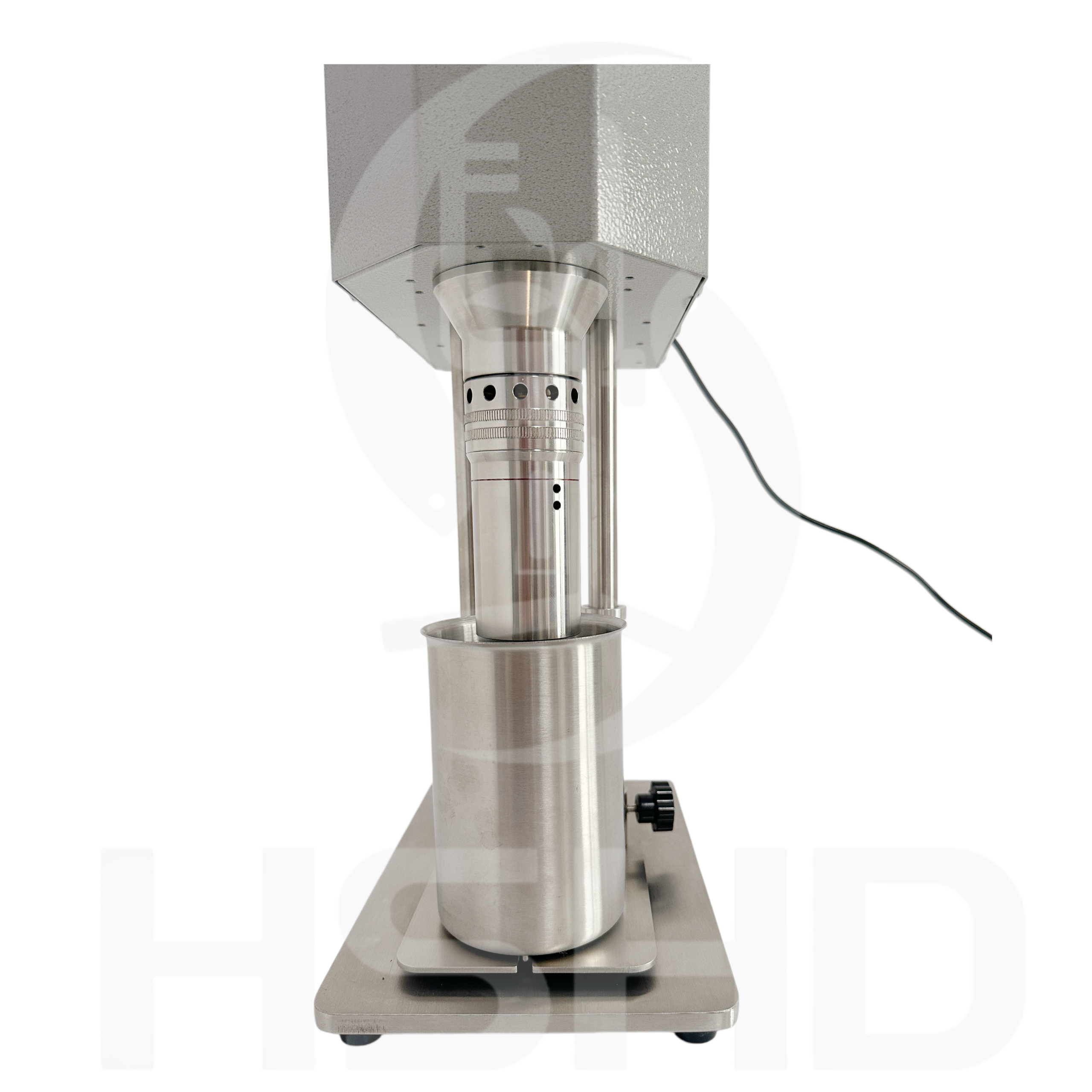
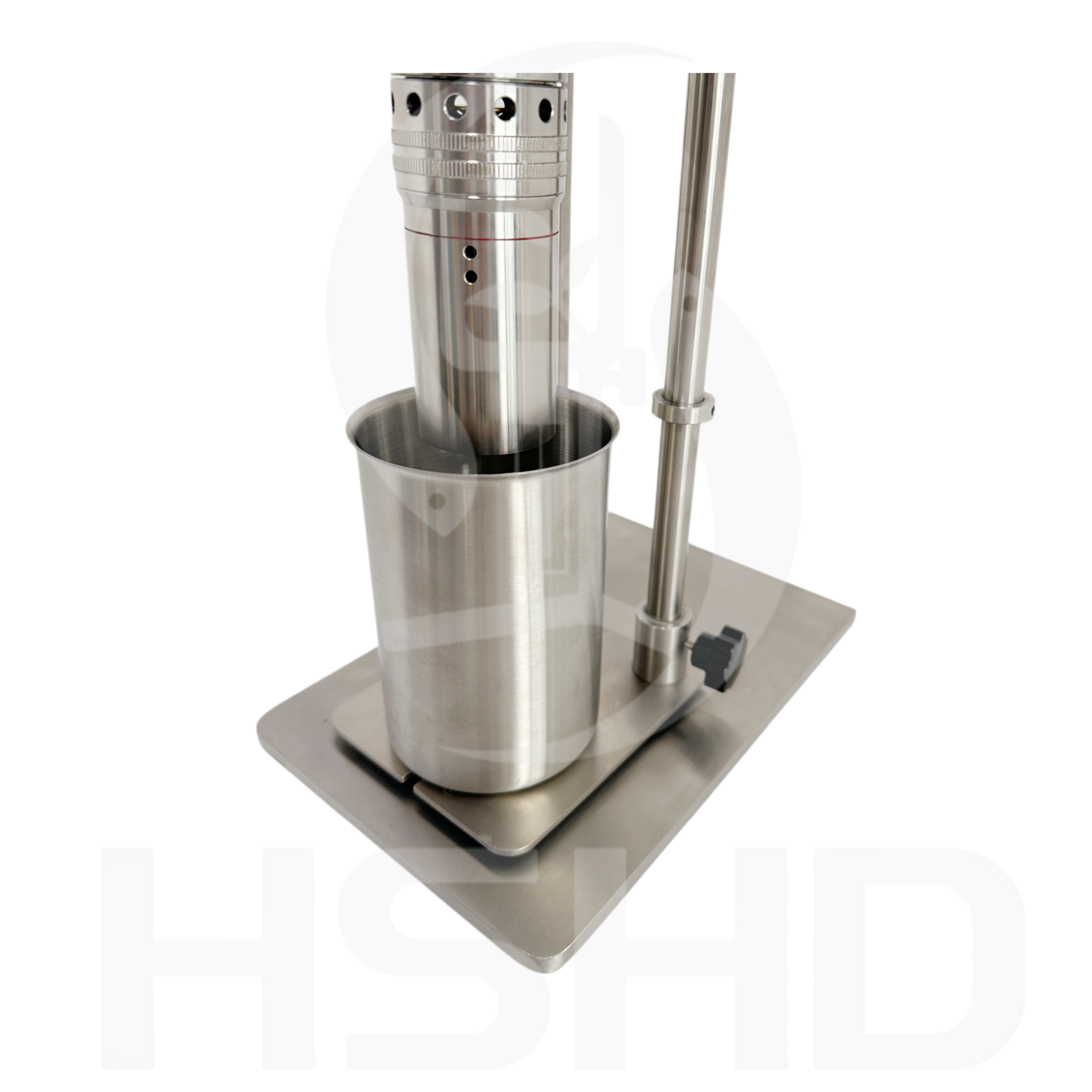
Place the slurry cup containing the liquid to be tested on the tray, and the liquid to be tested enters the annular space (shear gap) formed between the outer sleeve and the float of the viscometer. When the stepper motor drives the outer sleeve to rotate, the sleeve is subjected to viscous resistance in the liquid to be tested, generating a reaction force. This force will generate torque on the float in the sleeve through the liquid to be tested in the annular space, and the float is connected to a set of scale components. When the torque and viscous resistance reach equilibrium, the scale component will stabilize at a certain scale value. Since the scale value is directly proportional to the viscous resistance experienced by the sleeve, multiplying the scale value by a specific coefficient can obtain the final viscosity value, which will be displayed on the LCD screen for easy reading.
The shear rate and viscosity value have a linear correspondence, that is, the graph of the relationship between shear stress and shear rate is a straight line. In practical applications, many fluids may not follow Newton’s laws, but their rheology is relatively close to Newton’s laws, so viscosity meters can still be used for measurement, and the measured viscosity values are also relatively accurate. The calibration method of the digital six speed rotational viscometer is linear calibration in Newton mode, which is not applicable to the test sample that does not comply with Newton’s linear calculation method. In this case, non-linear calculation methods should be used for viscosity measurement and velocity calculation.
When the outer sleeve, float, and torsion spring operate at a rate of 300 revolutions per minute, the measurement unit of the viscometer is centipoise (or millipascal per second). The data measured at other rotational speeds require a series of multiplication transformations. The sixth part of this article will provide a viscosity calculation method for pseudoplastic fluids (such as drilling fluids).
When choosing different speeds or using different combinations of torsion springs and floats, the range of available shear rates may change. To broaden the range of shear stress and measure more liquids, different torsion springs can be replaced to solve this problem.
2.Model and Product Name
| Model | Product Name | Configuration |
| HSHD-1005 | Viscometer | R1-B1-F1 |
3.Main Technical Parameters
| No. | Category | Specification |
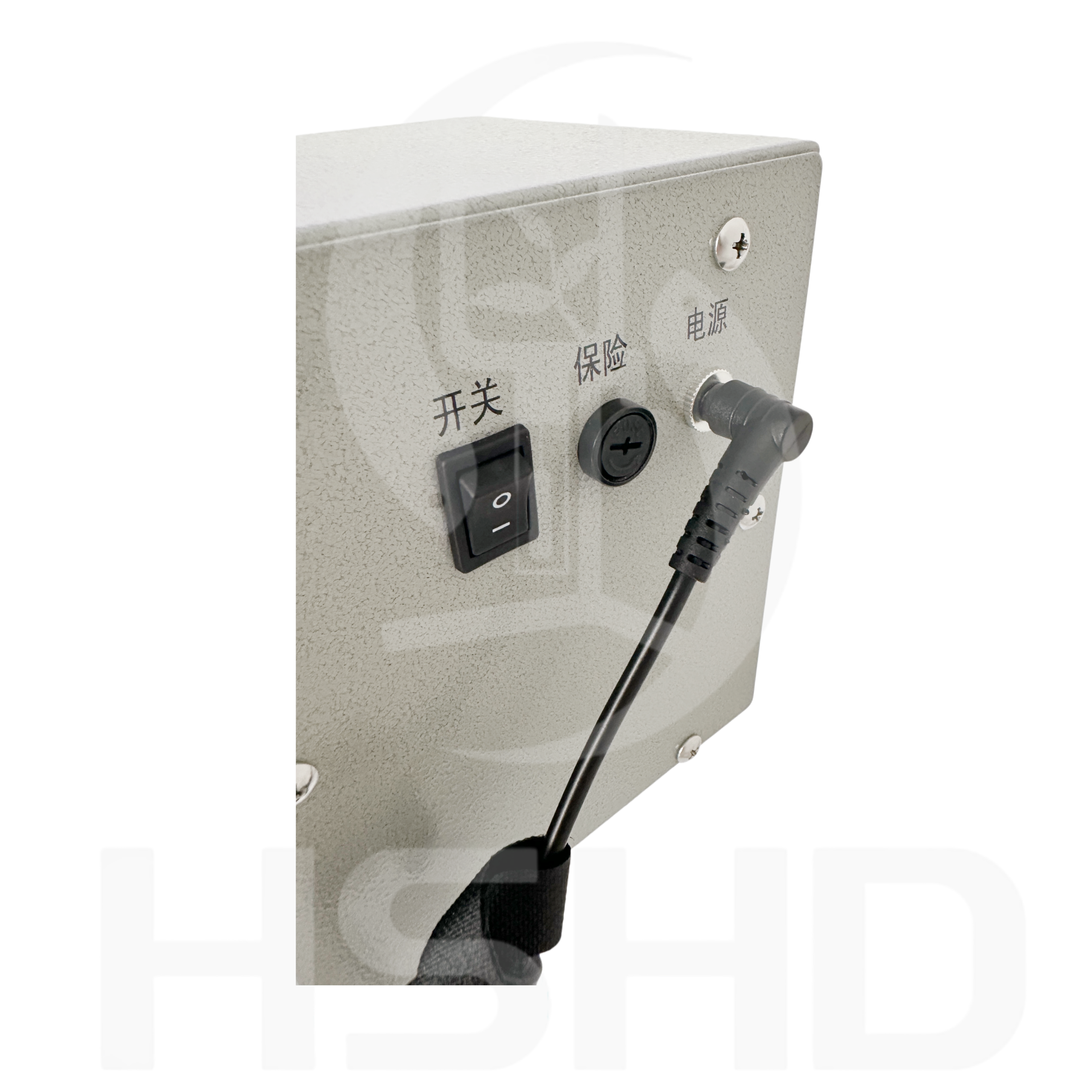
| 1 | Power Supply | AC220V±5% 50Hz |
| 2 | Motor Power | 40W |
| 3 | Environment Temperature | ≥20±5℃ |
| 4 | Environment Humidity | 45%RH~60%RH |
| 5 | Motor Speed | 800r/min |
| 6 | Variable Speeds Range | 3、6、100、200、300、600r/min |
| 7 | Measurement Accuracy | ±0.1 mPa.s (Newtonian fluid) |
| 8 | Display | Digital display |
| 9 | Viscosity Measurement Range | Newtonian fluid: 0.5~30000mPa.s (F1)
Non-Newtonian fluid: 1~150 mPa.s (F1) Shear stress: 0~153.3Pa (F1) Newtonian Fluid: 0.5~60 00mPa.s (F0.2) Non-Newtonian Fluid: 0~30mPa.s (F0.2) Shear Stress:0~30.7Pa (F0.2) |
Reviews
There are no reviews yet.