
- Introduction
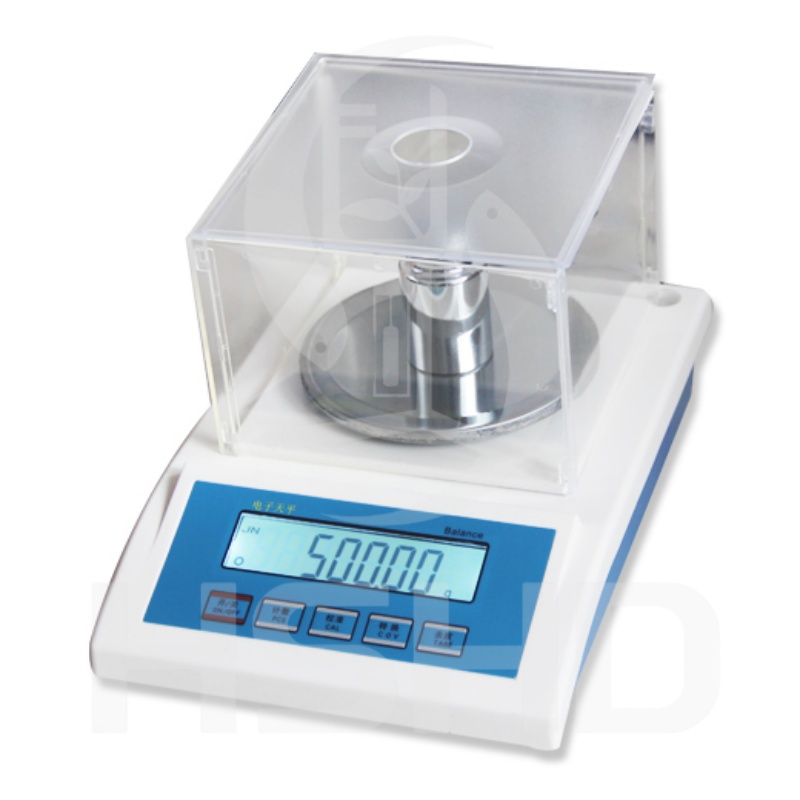
The electronic balance is used for weighing the mass of objects. Electronic balances generally employ strain gauge sensors, capacitive sensors, or electromagnetic balance sensors. The strain gauge sensor features a simple structure and low cost, but its accuracy is limited.
Application Areas
Suitable for use in scientific research institutions, colleges and universities, biomedical and pharmaceutical industries, industrial and mining enterprises, and other fields requiring precise weighing and mass analysis. It is an ideal instrument for mass measurement and analysis.
Performance Features
- Adopts high-stability strain gauge sensors. Each sensor is processed through high and low temperature aging to ensure accurate weighing even under harsh working conditions.
- Equipped with a limit protection device to prevent sensor damage in the event of overload.
- Built-in software system enables intelligent matching for different sensors, ensuring product consistency.
- Specially developed linearity and corner load error compensation system eliminates weighing errors caused by improper loading.
- Uses STN high-contrast liquid crystal display (LCD) for clear and sharp readability.
- Can be powered by a 9V dry battery.
- Technical Specifications
| Model | JY5002 |
| Weighing Range | 0-500g |
| Reading Accuracy | 10mg |
| Pan Size | Φ125mm |
| Net Weight | 6.8kg |
| Power Supply | 220V/50Hz±1Hz |
| Functions | Full-range tare; Basic weighing; Auto zero; Counting (adjustable sample); Multiple units (g, kg, ct, oz, lb); Power-on self-test; Auto calibration (external); Linear calibration (requires weights); RS232 interface (PC/micro printer); Two print modes; Auto fault alarm. |
| Features | Fully transparent design; Larger weighing range; External power supply; Smart backlight control; LCD large font display. |
Reviews
There are no reviews yet.